The Right Book at the Right Moment: Matching a Reader to Their Next Favourite
Photo: paperback books tied with ribbon and a handwritten note on a wooden table, via s.yimg.com
Books have a reputation as the present you buy when you don't know what to buy. The safe fallback. The thing you reach for in a service station at 6pm on Christmas Eve.
This is deeply unfair, because a book chosen well is one of the few gifts that keeps unfolding after the paper comes off. It occupies an evening, then a week, then a wet Sunday in February. It gets lent to a friend. It ends up on a shelf with a story attached. Nothing else in a £12 price bracket does quite that.
So let's retire the word "fallback" and treat the paperback as what it is: a small, portable, extremely personal gift. Here's how to pick one that actually gets read.
Why books get a raw deal
Gift culture rewards objects that announce their own value. A candle in a nice box says something instantly. A novel sits there being rectangular.
But the people who love books know the difference between a book and the book — and the second one is unforgettable. The trick is that you can't guess it. You have to profile.
The three-minute reader profile
You don't need a questionnaire or a spreadsheet. You need five answers, most of which you can gather from a single conversation, or from watching someone for a fortnight.
- What was the last thing they couldn't put down? For a lapsed reader, reframe it: the last thing they actually finished, even if it was three years ago and on a beach.
- What do they want to feel? Comfort, thrill, escape, a good cry, a laugh, or the pleasant unsettling feeling of a book that rearranges the furniture in your head.
- How do they read? In the bath, on the 07:42, in one greedy gulp, or eleven pages a night for a month. This determines length and density far more than taste does.
- Paper, screen or ears? Audiobooks and ebooks are not consolation prizes. For a long commute or a reader with arthritis or a toddler, they may be the only format that works.
- What's the last book they gave up on, and why? This is the gold. People are far more honest about abandoning a book than about loving one, and the reason usually tells you exactly what to avoid — too slow, too grim, too many characters, too clever for its own good.
Answer those five and you'll have narrowed the field from thousands to about a dozen.
Shortcuts by mood, not by genre
Genre labels help less than they used to, because the best books keep hopping between them. Mood is the better sorting hat.
- "I want to be somewhere else entirely." Nature writing, travel memoir, a great big historical epic. Anything with weather in it.
- "I want to be clever and satisfied." Cosy crime and locked-room mysteries — the Richard Osman and Janice Hallett shelf — or a twisty literary thriller that respects the reader.
- "I want to feel held." Warm, character-led fiction; small towns; baking; a book where not much happens and everything does.
- "I want to understand something." Narrative non-fiction on a subject they already natter about. Never a subject they've just suffered through.
- "I don't know what I like anymore." Short stories. The kindest possible re-entry point for a reader who has lost the habit.
If you're buying for someone who reads a great deal, buy sideways rather than obvious: a beautifully produced edition of a book they love, a translated novel from a small press, or a collection by an author they've mentioned once and forgotten they mentioned.
Format is half the gift
A hardback says this is an occasion. A paperback says take me on holiday. Beyond that:
- Signed and special editions for the superfan, though check it's a genuine signature and not a printed one.
- Clothbound classics when the point is the object as much as the text.
- Large print for anyone who's quietly stopped reading because the type got too small. This is one of the most thoughtful gifts available and almost nobody thinks of it.
- Audiobooks, especially memoirs read by their own author, which are a completely different experience from the page.
- Pre-loved copies. A 1980s Puffin edition of a childhood favourite, found in an Oxfam Books for £2.50, will often land harder than anything new. Check any inscription isn't addressed to someone else — or, better, choose one that is, and let the accidental history be part of the charm.
Where to shop in the UK
Independent bookshops are worth the walk: staff recommendations are still the best algorithm we have, and most will order anything in for the next day. Bookshop.org and Hive let you support indies from the sofa. World of Books and charity shops cover the second-hand hunt. And if you're near a big Waterstones, the table by the door is a fine place to be reminded what everyone's reading — just don't let it make the decision for you.
Wrapping a book so it feels like a treat
This is where the paperback earns its upgrade.
- Write in it. A short note on the flyleaf — two lines about why this one, for you — turns a book into a letter that happens to have 340 pages attached.
- Add a bookplate if the recipient is the sort who likes a bit of ceremony.
- Pair it with something small and relevant. A bookmark, a decent bath soak, a tin of tea, a train-sized torch for the bedside-table reader.
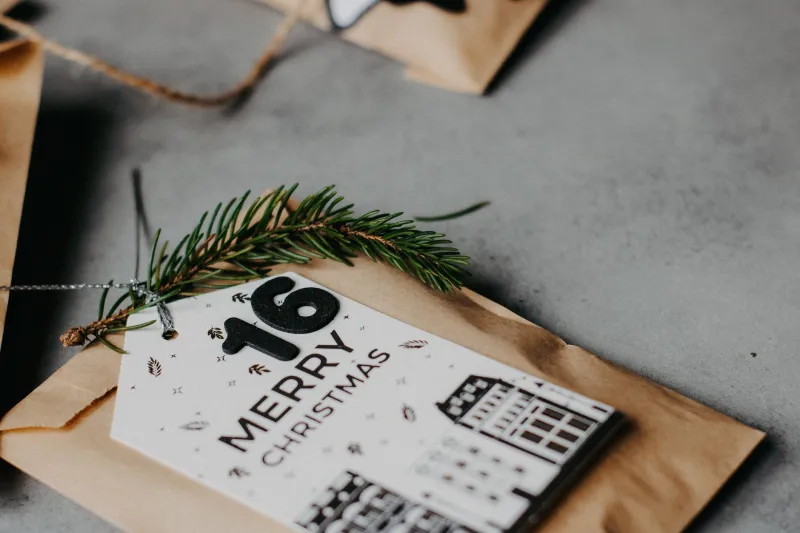
- Wrap it in kraft paper and ribbon, not a gift bag. A rectangular present wrapped properly looks considered, and cost you eighty pence.
Two traps worth dodging
First: don't gift your favourite book, gift theirs. The urge to hand someone the novel that changed your life is enormous and almost always misplaced. Second: don't gift a book about something difficult they're going through unless they've asked for it. A friend in a hard season usually wants a door out of it, not a mirror held up to it.
And if you simply can't decide? Give two. One safe and lovely, one strange and slightly risky, with a note that says "start with the second one." That's not indecision. That's a reading list with a ribbon on it.